
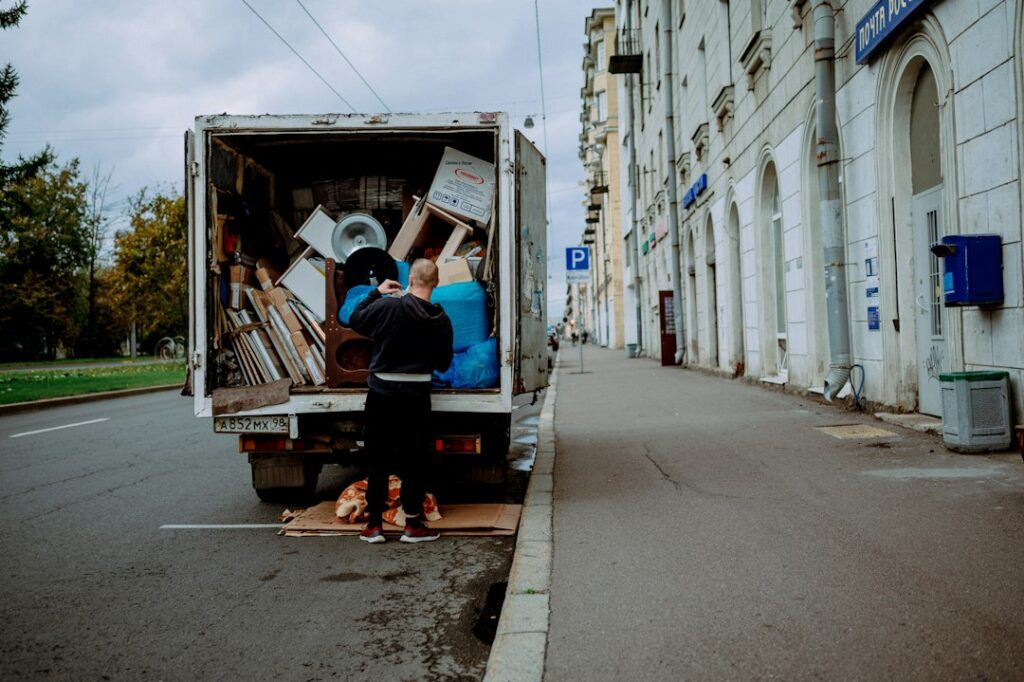
You can move house in the rain if the rain is steady but manageable, the roads to both homes are open, and everything that can soak up water is wrapped before it leaves the room. Postpone if Kenya Met has a heavy-rainfall or flood warning for Nairobi on your date, if your route or either compound is flooded, or if there is lightning during loading. Most rainy-day damage happens in the few metres between the door and the lorry, so that is where the planning goes.
This guide covers how to decide on the morning, what to wrap and how, the order to load in, and what to do with anything that does get wet.
Moving house in the rain: go or postpone?
Agree on the rules with your movers a few days before the date, not on the morning. A simple plan written down saves an argument in the rain at 7 a.m.
| On the morning | What to do |
|---|---|
| Light rain or drizzle, roads clear | Go ahead. Wrap everything and keep the loading path covered. |
| Heavy showers forecast for the afternoon only | Start early and aim to have the lorry loaded and closed before lunch. |
| Heavy-rainfall warning from Kenya Met for Nairobi on the day | Talk to your mover first thing. Shift the date or split the move over two days. |
| Flooding on your route or at either gate | Postpone. A loaded lorry should not drive through standing water. |
| Thunder and lightning during loading | Stop carrying. The crew waits under cover until it passes. |
| Murram access road turned to mud | Ask about a smaller vehicle to shuttle loads to the main road, or postpone. |
Check the daily Nairobi forecast on the Kenya Meteorological Department website the evening before and again at 6 a.m. In its outlook for the October to December 2026 short rains, Kenya Met expected Nairobi’s rains to continue into January, so a move booked for December or early January should have a rain plan too.
Agree on the rescheduling terms before moving day
Ask three questions when you book:
- If we postpone because of a weather warning, what is the new date and is there a charge?
- If rain stops us halfway, can the loaded lorry stay closed overnight, and where?
- If the new home is not ready because of water damage, can the goods go into storage for a few days?
Get the answers in writing, even a WhatsApp message. If you are moving out of a rental, tell your landlord early that the handover date may shift by a day. Most landlords prefer that to a wet floor and a damaged door frame.
What to protect, item by item
Not everything needs the same care. Plastic chairs and metal shelves can take a few drops. Fabric, wood, paper and electronics cannot.
| Item | Risk | How to protect it |
|---|---|---|
| Mattresses | Soak up water and hold it for days | Sealed plastic mattress bag, taped shut. Never carry one uncovered. |
| Sofas and upholstered chairs | Fabric stains and stays damp inside the foam | Blanket first, then several layers of stretch wrap over the top. |
| Wooden furniture | Swells, warps and loses its finish | Moving blankets with plastic over them. Keep drawers taped closed. |
| TVs, laptops, fridges | Water in the electronics | Original boxes or bubble wrap inside plastic. Carry screens last and keep them upright. |
| Documents and books | Pages stick and ink runs | Plastic crates with lids, or boxes lined with bin bags. |
| Rugs and curtains | Heavy when wet, slow to dry | Roll tightly, put them in bags and tape the ends. |
| Cardboard boxes | Go soft and split at the bottom | Tape the base twice. Stack them away from the lorry doors. |
Pack your documents, chargers, medicines and one change of clothes in a waterproof bag that travels with you, not in the lorry.
Set up the loading path
The walk from your door to the lorry is where things get wet. In Nairobi apartment blocks, that path often crosses an open compound or a basement ramp. Before the first item moves:
- Park the lorry as close to the door as the compound allows, with the back doors facing the building.
- Use a gazebo, a tarp held up on poles, or the block’s covered parking bay if management allows it.
- Lay cardboard or old blankets on the floor inside the door. Wet shoes on tiles cause slips while people are carrying heavy things.
- Keep one towel at the door for wiping hands and the bottom of each box.
- Ask the caretaker which lift and entrance to use, so wet trolleys do not cross the main lobby.
Load in the right order
Rain gets in when the lorry doors open, so the back of the load takes the most splash. Our crews load like this on wet days:
- Heavy, water-tolerant items at the front: plastic furniture, metal shelves, garden tools, the gas cylinder (empty and closed).
- Wrapped wooden furniture and appliances in the middle.
- Mattresses, sofas, electronics and paper boxes in the centre of the load, away from the doors and the walls.
- Last in: a tarp hung inside the doors, so the next time they open, water hits the plastic and not the boxes.
Use a closed box body lorry, not an open truck with a tarp tied over it. Ask your mover what vehicle is coming before the day.
Watch the roads, not just the sky
A dry morning can still mean a hard move if yesterday’s rain left the roads bad. During the March 2026 floods, water blocked major routes such as Mombasa Road and Uhuru Highway, and side roads with poor drainage flood even faster. Leave extra time for traffic, because Nairobi slows down a lot when it rains.
Estates with murram roads, such as parts of Karen, Kitisuru and the areas off Ngong, are the bigger risk. A heavy lorry can sink into soft ground near a gate. If your road is unpaved, send your mover a photo of it the day before. They may bring a smaller vehicle to shuttle loads to the tarmac.
Unload with the same care
The new home needs a dry route too. Clear a space just inside the door as a drop zone. Put the mattresses and electronics straight into their rooms instead of leaving them in a wet hallway. Before the crew leaves, open a few boxes from the edge of the load and check for damp. It is easier to sort out a problem while everyone is still there.
If something does get wet
Act the same day. Unwrap it, because plastic that holds water in is worse than no plastic. Wipe wood dry and leave it to air in a room with open windows. Stand mattresses on their side and point a fan at them. Take wet books and papers out of boxes and spread them out.
Mould can start to grow on damp items within a day or two, so the US Environmental Protection Agency advises drying wet items within 24 to 48 hours. Do not pack anything back into a closed cupboard or a storage unit until it is fully dry. If you are putting goods into storage over the rains, our guide on storing furniture in the rainy season explains how to keep damp out for weeks, not just one day.
Plan your home for the rains as well
Moving day is one day. The new house has to handle the whole season. Check the gutters, the drains and where water goes in the compound before you unpack everything. Our heavy rain and El Niño preparedness guide covers what to check at both homes. If you have some say in the date, our guide to the best time to move house in Nairobi shows which weeks are usually easier.
Our crews move homes all through the rains, with covered lorries, mattress bags and stretch wrap as standard. If you are planning house moving in Nairobi this season, tell us about your access roads and building when you request a quote, and we will plan the day around the weather.