
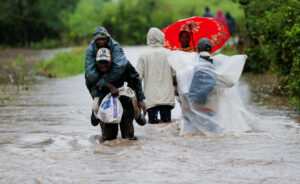
The Kenya Meteorological Department expects above-average rain across the country from late September into December 2026, driven by an El Niño that it gives an 81% chance of being very strong. The coast has already had an early warning. Heavy rain flooded parts of Mombasa, Kwale and Kilifi in mid-September, and in the week to 20 September, Mombasa’s airport recorded 105 mm of rain, the highest seven-day total in the country.
For households, the next few weeks are the time for El Niño preparedness in Kenya. That means clearing drains, lifting valuables off the floor, saving emergency numbers and, if you are planning a move, building in room for bad weather. This guide covers what the forecast does and does not say, what has already happened in Mombasa and other towns, how to prepare your home, what to do when a warning is issued, and how to plan a house move or storage between October and December.
What the forecast actually says
KMD’s outlook points to above-average rainfall across all 47 counties between late September and December. It does not arrive everywhere at once:
- Western Kenya and the Rift Valley, including Kisumu, Kakamega, Bungoma, Nakuru and Uasin Gishu, were expected to start receiving rain from the last week of September.
- Central and coastal counties, including Mombasa, were expected to see the rains set in around the second and third weeks of October. Nairobi was already included in the rain forecast for the week of 22 to 28 September.
- South-eastern counties were expected to get moderate to heavy rain from late October.
On 21 September, the department urged Kenyans to “prepare early and take action early”, and listed the main risks as flooding, landslides, damage to buildings, displacement and disruption to transport and services.
Two points are worth keeping in mind.
- A strong El Niño does not guarantee record rain. Meteorologists point out that the strength of El Niño alone does not decide how much rain Kenya receives. Other factors, including conditions in the Indian Ocean, play a large part.
- No forecast can tell you whether your street will flood. Flooding depends on local drainage, slopes, rivers and blocked culverts. The outlook tells you to prepare. It does not tell you exactly where water will go.
Follow KMD’s official channels for updates. Seasonal outlooks are revised as the season develops, and the department issues shorter weekly forecasts and heavy-rain alerts as conditions change.
Mombasa has already felt it
The coast did not wait for October. On 12 September, heavy rain and strong waves flooded parts of Mombasa, Kwale and Kilifi. In Mombasa, water rose in Burukenge, Ziwa La Ng’ombe, Enuka, Railway and Ziwani. In Burukenge, floodwater mixed with sewage entered homes, and families lost mattresses, clothes, cookers and food. Ziwa La Ng’ombe Health Centre was cut off, and ambulances could not reach it directly. Ferry services between Mombasa Island and the mainland at Likoni were badly disrupted.
The rain kept coming. In the week of 14 to 20 September, Mombasa’s airport recorded 105 mm, more than any other weather station in the country that week.
Governor Abdulswamad Nassir has blamed part of the problem on blocked drains, saying that individual acts of dumping “build up across the city, eventually obstructing channels that are meant to drain excess water”. The county has named social halls as temporary evacuation centres and put its health department on standby for waterborne disease.
For Mombasa residents, the lesson from September is that low-lying neighbourhoods and informal settlements flood first, and that transport links such as the Likoni Ferry can be disrupted quickly. If you live or work on the South Coast, plan for delays crossing the channel on heavy-rain days.
Other towns that have flooded this year
Mombasa is not the only place with fresh memories of flooding. 2026 has already been a hard year.
Nairobi, March. Flash floods in early March swept through low-lying neighbourhoods and informal settlements, carried away vehicles and disrupted flights. Within days, at least 42 people had died nationwide, 26 of them in Nairobi. By early April, the national death toll from the March and April floods had reached 112, across 30 counties.
Mombasa and Kwale, April. Three days of heavy rain and strong winds in late April hit all six Mombasa sub-counties. About 390 people were displaced from Jomvu and Likoni, a police station was flooded, and part of the Coast Regional Commissioner’s office was damaged. In Kwale, homes flooded in Lungalunga and Vanga, and a boda boda rider was swept away crossing a flooded bridge near Shimba Hills.
Kilifi, now. Officials preparing for the El Niño season project that more than 80,000 families in Kilifi County could face displacement. The risk is highest along the Sabaki, Kombeni and Nzovuni rivers, and in Kakuyuni and Garashi wards in Malindi and Magarini.
Western Kenya, this week. The weekly forecast for 22 to 28 September expected enhanced rain over Kakamega, Vihiga and Bungoma, with rain across much of the Lake Victoria Basin and the Rift Valley as the season begins there first.
These events show where water goes first: riverbanks, low-lying estates, informal settlements and roads with blocked drains. Wherever you live, those are the places to watch.
Where Nairobi is most exposed
Nairobi’s drainage was built for a much smaller city. Governor Johnson Sakaja has said the system “was designed for a city of half a million people”. The county and the Kenya Red Cross have mapped 227 flood hotspots across the city, 189 of them rated high priority. The Red Cross has highlighted high-risk zones in Dagoretti North, Mathare, Embakasi North, Embakasi South and Makadara.
City Hall has announced a KES 2.4 billion plan covering river desilting, clearing blocked drains, new outfall drains and emergency shelters. It has also issued 14-day relocation notices to people living along riverbanks and waterways. If you live near a river or a known flooding point, take those notices seriously. The county’s message has been simple: listen to official advice, because lives come first.
Before the rains: a checklist for your home
Most of these jobs take an afternoon, and they cost far less than replacing a sofa or a laptop.
Outside and around the building
- Clear gutters, downpipes and the drains around your compound. Leaves and plastic block them quickly.
- Check the roof for loose sheets and cracked tiles, and fix leaks now rather than during a storm. In April, strong winds tore roofs off homes and a mosque in Mombasa.
- Ask your caretaker or management company when the compound drains were last cleared, and whether the basement or ground floor has flooded before.
- Trim branches that hang over the house, the wiring or where you park.
- Do not dump rubbish in drains or on roadsides. As Mombasa’s governor put it, small blockages add up.
Inside
- If you live on the ground floor or in a house, lift electronics, documents and valuables off the floor. A shelf or a raised stand is enough in most cases.
- Put title deeds, passports, certificates and insurance papers in a waterproof bag or box, and keep it where you can grab it quickly.
- Photograph or scan important documents and store copies online.
- Move rugs, books and wooden furniture away from exterior walls and doors that let in water.
- Keep a torch, a charged power bank and basic supplies in one place.
Numbers to save now
- Kenya Red Cross: 1199 (toll-free).
- Nairobi County emergency hotline: 1508, set up for reporting incidents during the rains.
If you live outside Nairobi, find your own county’s emergency line now, before you need it. Save the numbers in your phone and share them with anyone in your household who may be home alone.
If you rent: agree the basics with your landlord now
Tenants often find out who is responsible for a leaking roof or a flooded store only after the damage is done. Settle it before the rains.
- Report any existing leaks, damp patches or blocked drains in writing, by email or text, and keep a copy.
- Photograph the condition of the flat now, especially ceilings, walls and floors near windows and doors. The photos help if there is a disagreement about damage or your deposit later.
- Ask whether the building has a plan for heavy rain: who clears the drains, who to call out of hours, and where residents should move cars if the basement floods.
- Check whether your own contents insurance, if you have it, covers flood and storm damage, and what it excludes.
When a heavy-rain warning is issued
KMD issues short-term advisories when heavy rain is expected. When one covers your county:
- Avoid walking or driving through floodwater. Moving water is stronger than it looks, and it can hide open drains. The boda boda rider lost near Shimba Hills in April was crossing a flooded bridge.
- Keep away from riverbanks, open fields and trees during storms.
- If your building’s basement has flooded before, ask management where to move cars.
- Rely on official updates from KMD and your county rather than forwarded messages, which can be out of date.
If you are told to leave, leave. Take your documents, medicines, phone and charger. Furniture can be replaced, and no belongings are worth going back into rising water for.
Planning a house move between October and December
October to December is also a busy moving season, with month-end and December moves on top of the rains. You do not need to cancel a move because of El Niño, but you should plan it differently.
Book with room to change the date. Ask your mover how rescheduling works if a heavy-rain warning covers your moving day. At Space Move, you can change the date at no charge, subject to availability, if you tell us early.
Start early in the day. An early start gives you more daylight to load and unload, and more time to pause if a heavy shower passes over. Check the forecast for your date the evening before, and again in the morning.
Ask how your furniture will be protected. Our crews wrap every piece of furniture in thick mover blankets and stretch film before it leaves the house, and lay floor runners along the walking route. That protects against light rain and muddy floors, but it is not a reason to carry a sofa across an open compound in a downpour.
Check access at both addresses. Unpaved access roads, steep driveways and low-lying compounds can become hard for a loaded lorry to reach after heavy rain. Tell your mover about any of these when you ask for a quote, and have a back-up plan for where the lorry can stop.
Allow extra time for long-distance moves. If you are moving between Nairobi and the coast, build slack into the schedule. Heavy rain can slow traffic on the main highway, and moves to or from the South Coast may depend on the Likoni Ferry, which September’s weather has already disrupted. Our Nairobi to Mombasa moves are planned around the route and the season, and storage can cover a gap if the weather delays your arrival.
Keep documents and electronics with you. Carry your documents, laptops and anything irreplaceable in your own car rather than on the lorry.
If you are still planning, our house moving service in Nairobi includes a survey, in person or by video call, where you can raise all of this before the day.
If you need to store belongings through the rains
The rainy season is a common reason to put things into storage: a ground-floor flat with a history of flooding, a renovation delayed by the weather, or a gap between leaving one home and getting the keys to the next.
If you store, pack for damp as well as dust. Dry everything fully before it is wrapped, keep mattresses and upholstery in breathable covers, and ask any facility how goods are stored off the floor. Our storage in Nairobi includes professional wrapping, palletising, fumigation and inventory tracking, and we can collect, store and deliver under one combined price when your new home is ready.
For fragile items and electronics that need extra protection, our packing service uses strong cartons, bubble wrap and stretch film, which adds a layer of protection against damp.
The short version
The rains have already reached the coast and the west, and Nairobi is expected to follow. Clear your drains, lift your valuables, bag your documents, and save 1199 and your county’s emergency number in your phone. If you are moving, choose a mover who will change the date if the weather turns. And if you are ever told to leave your home, go. Everything else can be dealt with once the rain has passed.